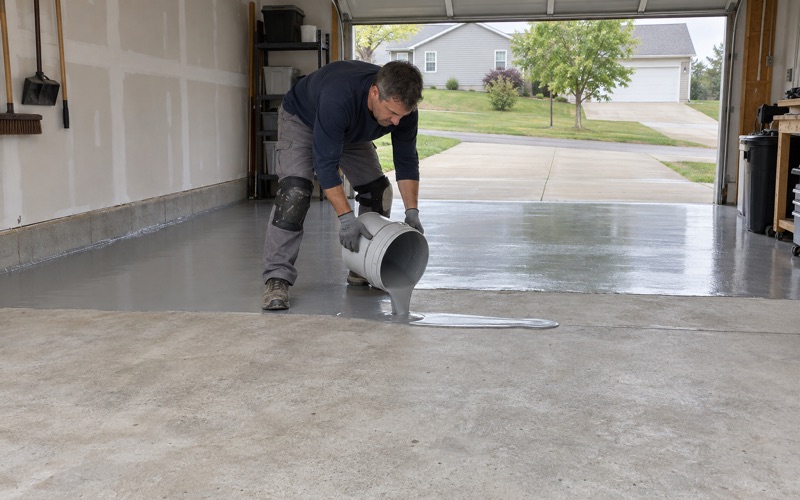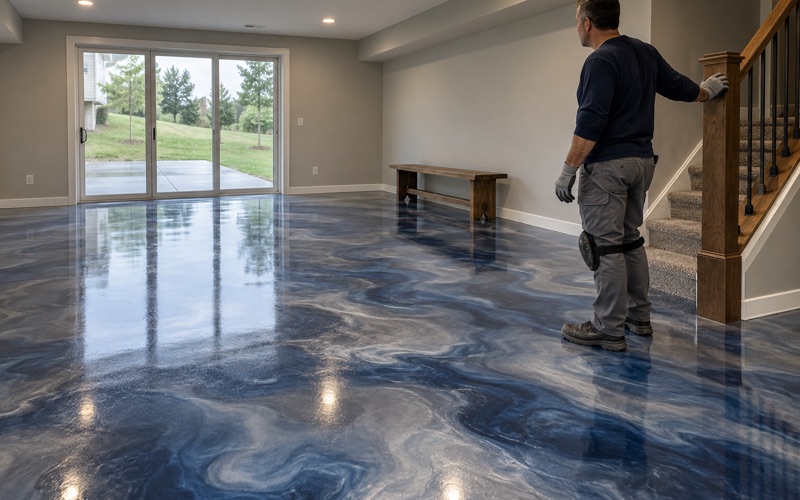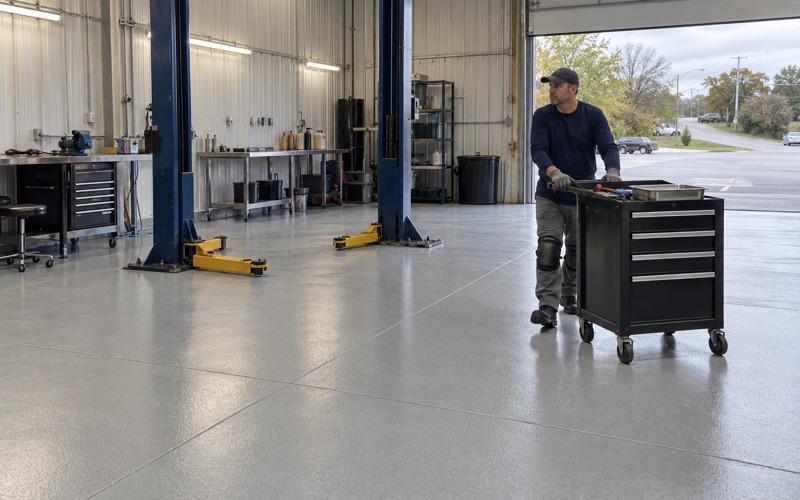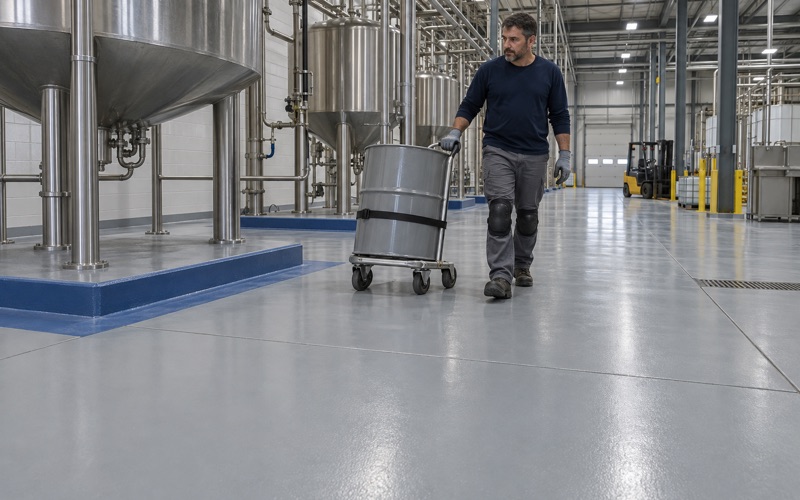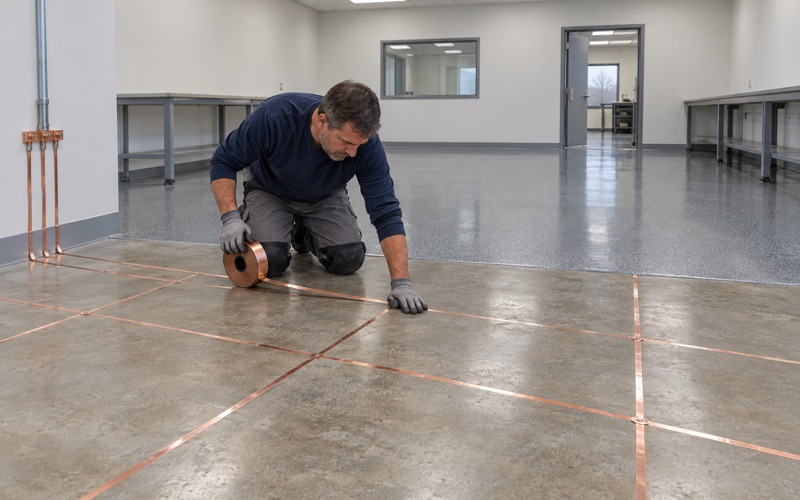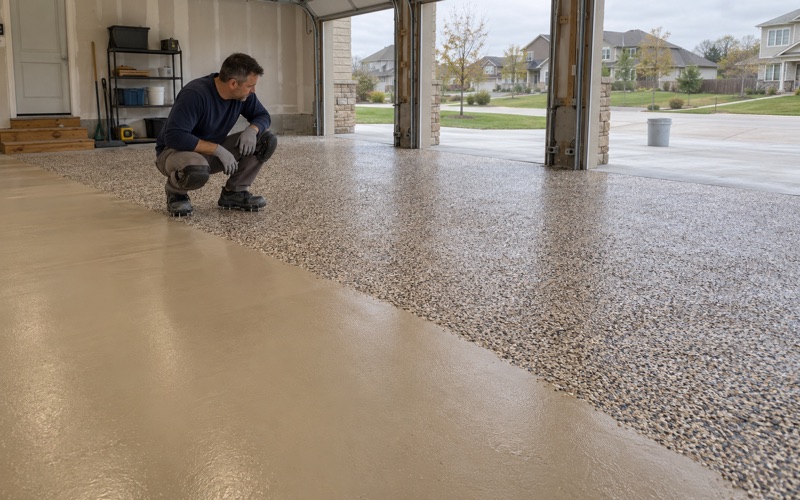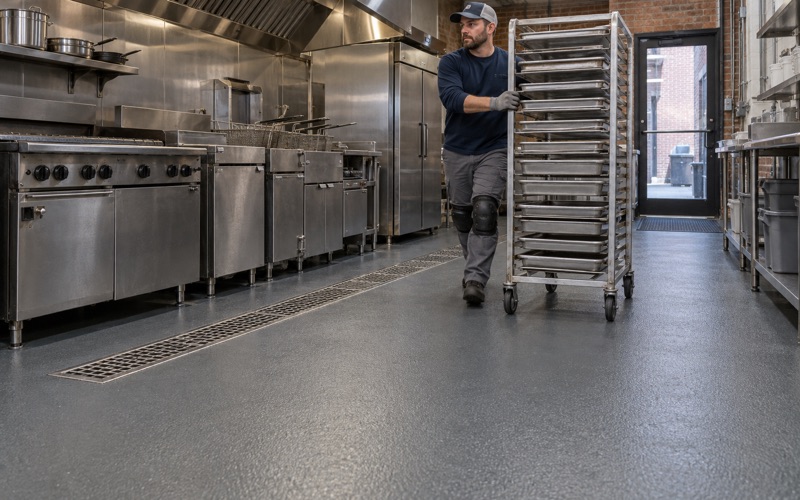
Iowa City Epoxy Flooring approaches epoxy flooring in Muscatine with more than 20 years behind us and one question in front: what will land on this floor, and how will it be washed? In a food room the answer is usually acid, water and heat, often in the same hour. That combination decides how the slab is opened, which resin goes down and what texture finishes it.
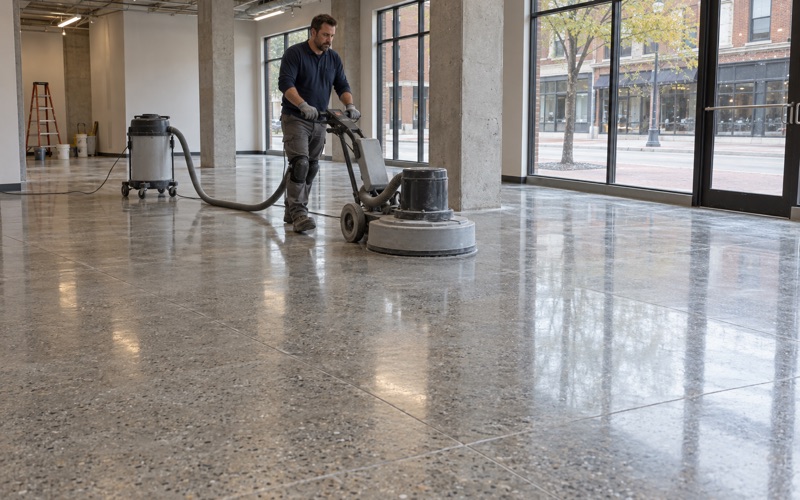
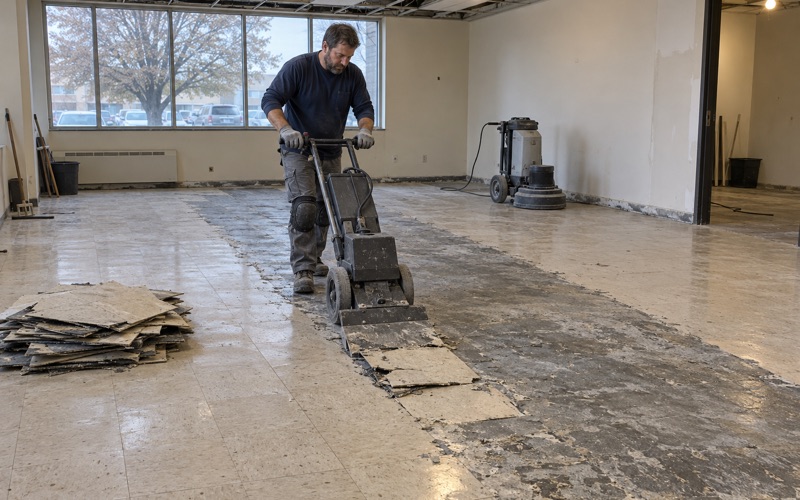
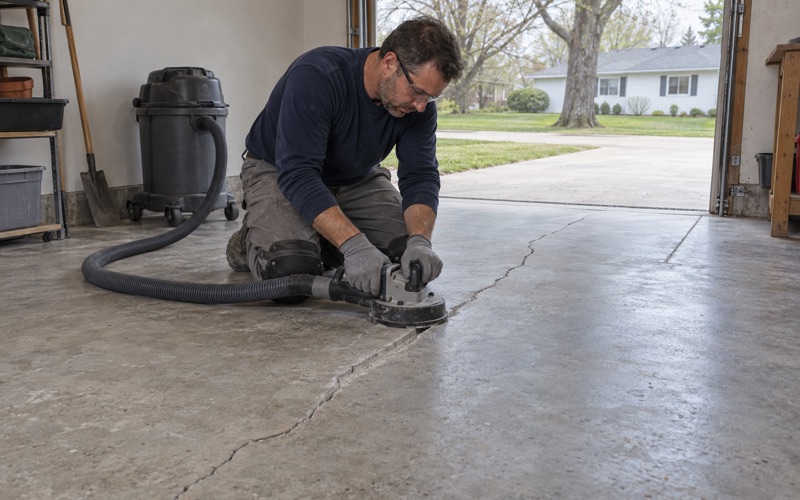
Every slab we coat is opened with a diamond grinder or a shot blaster rather than an acid etch, which leaves a real concrete surface profile on the ICRI CSP scale for the primer to bite into. Before any price is final, we map cracks, spalls and old coatings, and we tell an owner plainly when a section needs repair or replacement before it should carry a coating.
Our written proposal names the product line, the number of coats and the finished thickness, so a plant engineer or a restaurant owner can hold the finished floor up against the quote. On production floors we schedule around shifts, using overnight and weekend windows when a line cannot stop, and grinding dust is captured at the machine by vacuum instead of being rinsed away.
A Heinz Plant Since 1893 and the Rule Its Floors Answer To
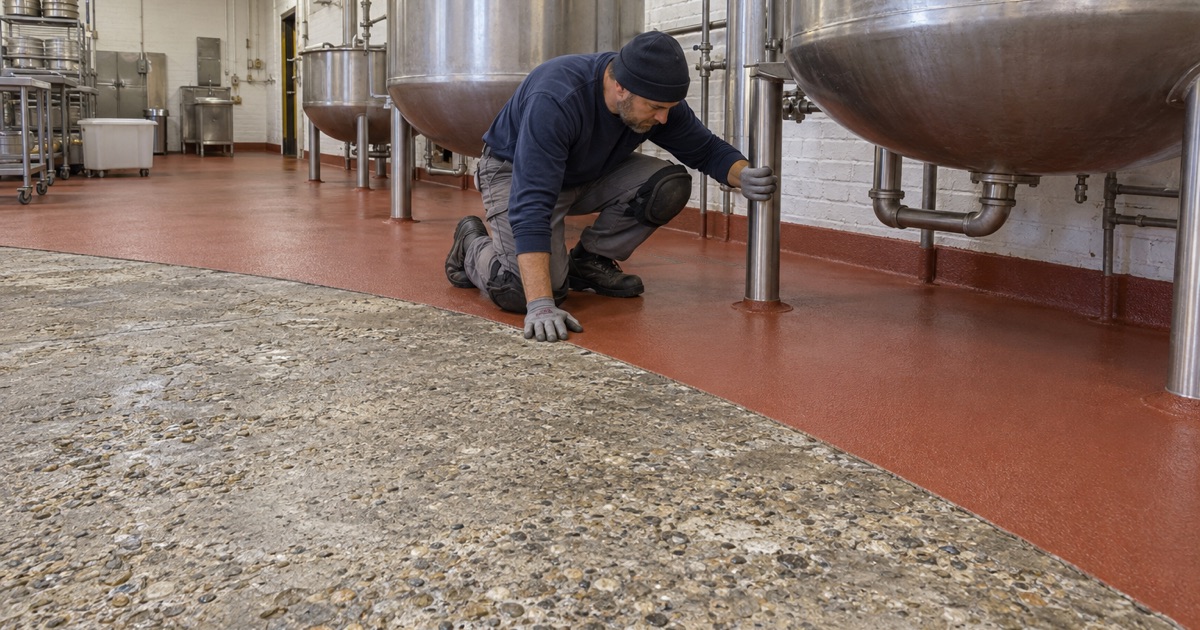
Kraft Heinz on Isett Avenue
Heinz has made food in Muscatine since 1893, and the Kraft Heinz plant at 1357 Isett Avenue is described as the oldest continuously operating Kraft Heinz facility in the US. Its lines turn out Heinz Ketchup, single-serving ketchup packets, Heinz Homestyle Gravy and barbecue sauces, which puts tomato and vinegar at the center of the work.
In December 2025 the Quad Cities Regional Business Journal reported a 60 million dollar investment in the plant, with 48 million of it for a facility overhaul covering infrastructure repairs, wastewater treatment, HVAC, electrical and piping. The article does not say what the overhaul does to floors, and we have no part in that project. It does show how a food plant this old keeps itself current.
What 21 CFR 117.20(b)(4) Asks of a Floor
FDA’s current good manufacturing practice rule for human food applies to a manufacturer like the Heinz plant. Section 21 CFR 117.20(b)(4) requires plant buildings to be constructed so that floors, walls and ceilings may be adequately cleaned, kept clean and kept in good repair. The same paragraph requires that drip or condensate from fixtures, ducts and pipes does not contaminate food, food-contact surfaces or packaging materials.
Read as a floor specification, that sentence asks for three things: a surface a crew can actually get clean, one that stays clean between washes, and one that does not break down into pits and open joints. Bare concrete struggles with all three in a sauce plant, because its pores hold residue and its surface wears away under acid, hot water and cart traffic.
A Performance Standard, Not an Approval
FDA does not approve floor coatings, and it does not certify the people who install them. The rule describes an outcome, so the burden sits with the plant to show its floor can be cleaned and is in good repair. When we propose a system for a food room, we explain how it serves that outcome rather than pointing to a stamp that does not exist.
In practice a plant documents its sanitation and maintenance, and an auditor looks at the floor as it is that day. A coating chosen for the room’s chemicals and cleaned on schedule makes that conversation easier. A coating peeling at its edges makes it harder, whatever the label on the pail said.
Looking for epoxy-flooring closer to Coralville? See Epoxy-Flooring in Coralville.
Ketchup and Vinegar Are Acids: What They Do to Bare Concrete
How Acetic Acid Works on Cement Paste
Vinegar is a dilute acetic acid, and tomato products are acidic on their own. Acetic acid attacks Portland cement paste by dissolving the calcium silicate hydrate gel that binds concrete together. As that binder goes into solution, porosity rises and strength falls, and both effects grow with the acid’s concentration and how long it stays on the slab.
Research comparing organic acids at 10 percent found acetic acid milder than citric or lactic acid, but milder is not harmless. A splash hosed off in minutes does little, while a film left under a filler or along a conveyor for a full shift keeps working. That is why spill location and cleanup timing matter as much as the acid itself.
Where Worn Concrete Etches First
Once the hard cream at the top of a slab is gone, acid reaches coarser paste and exposed aggregate. Etched concrete looks sandy, then rough, and the rough surface holds more sauce residue, which holds more acid against the floor. Each washdown carries off some of the loosened material, so the damage tends to deepen where the same spill lands every day.
Before coating a slab like that, we map the soft and pitted zones, sound them out and decide whether they need patching with a repair mortar or removal down to sound concrete. A coating laid over weakened paste fails with the paste, not at the resin, so the repair has to sit on material that still has its strength.
Choosing a System for Acid and Heat
In food rooms that see acid, hot water and steam, urethane cement is a common choice because it tolerates thermal shock and many food acids better than a thin epoxy film. Epoxy still has a place in dry storage, packaging and support areas, where a 100% solids epoxy base under a chemical-resistant topcoat can serve rooms with milder exposure.
We match the system to the specific exposure, so we ask which products are spilled, at what temperature, and how the floor is cleaned and sanitized. A moisture test belongs in the same written scope, using ASTM F1869 calcium chloride kits or ASTM F2170 in-situ relative humidity probes, because moisture is the first exclusion we name in any coating warranty.
Washdown, Condensation and Good Repair
A Floor That Gets Wet Every Shift
Washdown floors take water, detergent and sanitizer daily, often hot and under pressure. A resinous floor for that service needs a texture that grips a wet boot without trapping residue. We specify that texture by the broadcast aggregate and topcoat used, usually a quartz aggregate broadcast, rather than calling a floor slip resistant as a slogan.
Joints, trenches and the base of walls are where washdown water tends to find its way under a coating. We detail those edges in the scope, terminating the coating into sound concrete and carrying a coved base up the wall where crews clean, so the floor-to-wall line can be scrubbed rather than left as a dirt trap.
Condensate and the Dew Point
The rule’s condensate clause is about drip from ducts and pipes, but condensation also matters during installation. If the slab surface sits near the dew point, moisture forms on it and can cause amine blush on epoxy or a weak bond. We read slab temperature and the dew point spread at the surface before each coat and set the cure schedule by those readings, not by the calendar.
Cold rooms and areas beside coolers are the usual trouble spots in a food plant, because the slab runs cooler than the air above it. In those zones we may warm the space, wait for conditions to change or choose a product suited to lower temperatures, and we say which one before the work starts.
Keeping a Floor in Good Repair
Good repair is the part of 117.20 that keeps running after the installers leave. A food floor fails at its weakest point, usually a chipped edge at a doorway, a crack that reopened, or a worn lane where forklifts turn. Small breaks let water and acid under the coating, so catching them early costs less than recoating a whole room.
We document every crack and spall we find before coating and note which ones are moving, since a live crack tends to come back through any surface. For rooms that cannot close for long, we plan repairs in sections a crew can hand back to production quickly, so the floor is brought back into shape a piece at a time.
Smaller Food and Sauce Kitchens Across Muscatine
Who Inspects a Muscatine Kitchen
Plenty of food floors in this city sit outside a large manufacturer. Restaurants, grocery stores and smaller food businesses here are inspected by the state’s DIAL Food Safety Bureau directly, since Muscatine County is not covered by a contracting local health department. Retail food work is inspected against the 2017 FDA Food Code with its Supplement, as Iowa adopts it.
The Food Code governs kitchens separately from the cGMP rule that covers a plant, but the floor goals overlap: a smooth, durable surface that cleans easily. Section 6-201.13 calls for coved, closed floor and wall junctures, and 6-201.11 allows an antislip floor where wet conditions make slipping a concern, so a kitchen can have grip without giving up cleanability.
Planning a Kitchen Floor Around the Code
For a sauce kitchen, a commissary or a meat counter, we plan the floor around those two Food Code sections from the start. The coved base runs continuously around the wet rooms, the textured finish goes where water and grease land, and dry storage can carry a smoother surface that is quicker to mop.
Whatever the age of the building, we test the slab for moisture before the price is final, because a newer slab is not automatically a drier one. Moisture vapor rising through concrete is the first exclusion in most coating warranties, and we explain that exclusion before the job is sold rather than after a blister appears.
Permits and Questions for the City
Muscatine’s current building-code editions could not be confirmed from the city’s posted Title 8 documents, which are out of date in places. Before coating work that touches walls, plumbing or a change of use, we ask the City of Muscatine what applies instead of assuming an answer. For a retail kitchen, DIAL is the office that inspects the finished room against the Food Code.
A floor coating is a surface, not a building fix. It does not stop water entering through a slab, it is not flood protection, and it does not count as radon mitigation, which in Iowa takes a state credential. We say that early so a kitchen owner budgets for the right repairs before any resin goes down.
- 20+ Years Coating Concrete
- Moisture Test in Every Scope
- Free Written Estimates