Iowa City Epoxy Flooring installs industrial epoxy flooring in Iowa City, IA, serving surrounding cities including Coralville, Tiffin, North Liberty, Mount Vernon and Amana. Manufacturing floors, warehouses, distribution centers, maintenance shops and agricultural buildings ask more of a coating than any home garage, because they carry forklifts, pallet jacks, chemicals, heat and constant traffic, often around the clock. After more than twenty years on concrete in this region, we build industrial floors around one idea: the right system for each area, installed in a way that keeps the plant running.
That starts with an honest survey of the slab and the work done on it. We map cracks, spalled joints, oil-soaked areas and old coatings, test for moisture, and talk with your maintenance and safety staff about traffic, chemicals and cleaning. The written proposal then names the product line, the number of coats and the finished thickness for every zone, along with a phasing plan that fits your shifts.
Industrial Floors We Build
Manufacturing and Assembly Floors
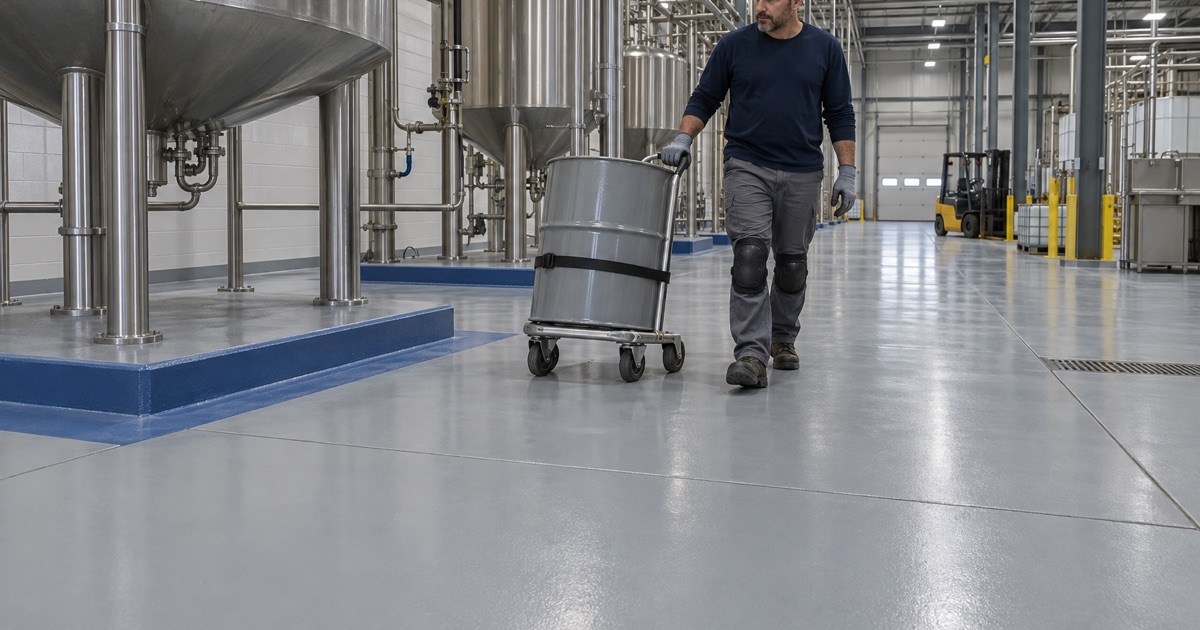
Production floors take oil, coolant, hydraulic fluid, metal shavings and dropped parts every shift. A thick, chemical-resistant epoxy or epoxy mortar resists impact and keeps fluids on the surface where they can be cleaned up instead of soaking into the concrete. Around machines with heavy leaks, we often specify a thicker build and coved edges at bases and walls.
We also plan for maintenance. Areas around presses, CNC machines and wash stations can be built so that a damaged section can be repaired and recoated without disturbing the rest of the floor.
Warehouses and Distribution Centers
Warehouse floors fail first at joints and in forklift lanes, where hard wheels chip coating edges and grind at the surface. We repair joint edges, fill joints with semi-rigid filler where wheeled traffic crosses them, and specify a high-build system that stands up to constant turning and braking. Racking areas, docks and charging stations each get a build suited to their loads.
Light color and gloss also matter in a large warehouse. A bright, reflective floor can improve visibility in aisles, and contrasting lane markings make traffic patterns clear to drivers and pedestrians alike.
Food and Beverage Processing Areas
Food plants are washed down hard and often, with hot water, steam and strong cleaners. Those conditions can soften or crack ordinary epoxy, so we typically specify urethane cement with integral coves, sloped where needed to drains. The surface is textured to stay slip-resistant when wet and sealed to resist the fats, sugars and acids that come with food production.
We coordinate these jobs closely with sanitation and quality staff. Cure times, odor and dust all matter in a food environment, and the schedule is set to fit planned shutdowns.
Farm Shops and Equipment Buildings
Across Johnson County and the surrounding area, farm shops and equipment dealers deal with mud, fuel, hydraulic oil and heavy machinery tracking across the slab. A ground and coated floor makes cleanup far easier and holds up to the weight of tractors and implements. Light colors brighten large shop buildings and make dropped hardware easier to find.
These buildings are often unheated or partly heated, which affects when a coating can cure. We read slab temperature and the dew point and schedule around them, rather than forcing a winter installation that will not perform.
Choosing the Right System
High-Build Epoxy Coatings
High-build 100% solids epoxy is the workhorse for dry industrial floors. It bonds well to properly ground concrete, builds thickness in a few coats and resists many oils and chemicals. With a broadcast of quartz or a grit topcoat, it can also provide reliable traction in production areas.
For most warehouses and light manufacturing floors, a well-built epoxy system is the best balance of cost, durability and appearance. We adjust thickness and topcoat by zone rather than using one build everywhere.
Epoxy Mortar and Troweled Systems
Where floors see heavy impact, steel wheels or severe wear, a troweled epoxy mortar provides a much thicker, stronger surface. It can also level worn areas and rebuild damaged sections as part of the same installation. These systems take more labor but outlast thin coatings in the hardest-working parts of a plant.
Mortar systems are often used selectively. A plant might put a troweled mortar at loading docks, under forming equipment and along the main cart route, with a lighter high-build coating in storage and assembly areas where traffic is lighter.
Urethane Cement for Heat and Harsh Chemicals
Urethane cement combines cement and urethane resin to create a floor that tolerates hot water, steam, thermal shock and many acids and alkalis. It is the standard choice for washdown rooms, food processing and areas near ovens, fryers or hot process lines. It is also more tolerant of moisture in the slab than most epoxies.
Urethane cement is usually installed with integral coves at walls and equipment bases, and with careful detailing at drains and trench grates. Those edges are where washdown water attacks a floor first, so they get as much attention as the open field.
Installation Without Shutting Down
Phasing Around Shifts
We divide large floors into zones and work around production, closing one area while others keep running. Overnight and weekend windows, planned maintenance shutdowns and holiday breaks are all options, and fast-curing materials can shorten the time any one zone is out of service. The phasing plan is agreed in writing before work begins.
Each phase lists what has to be moved, where equipment and materials are staged, and when the zone returns to service. That gives production planners real dates to work with instead of an estimate that slides as the job goes along.
Dust, Odor and Safety on Site
Grinding and shot blasting dust is captured at the machine with industrial vacuums, and residue is collected rather than washed into floor drains. We follow your site’s safety rules, coordinate lockout and access, and keep work areas barricaded and marked. Odor and ventilation are planned with your staff, especially near offices or food areas.
Moisture Testing on Industrial Slabs
Industrial slabs are tested for moisture like any other, using calcium chloride emission tests or in-situ relative humidity probes. Older plants and slabs on grade without a vapor retarder can move a surprising amount of moisture, and that vapor can blister an epoxy from below. Where results are high, we use a moisture-mitigation primer or a more tolerant system such as urethane cement, and we explain the warranty exclusions for moisture before the job is sold.
- 20+ Years Coating Concrete
- Moisture Test in Every Scope
- Free Written Estimates