
Iowa City Epoxy Flooring installs flake epoxy floors in Iowa City, IA, serving surrounding cities including Coralville, Tiffin, North Liberty, Mount Vernon and Amana. A flake floor is a coating system with colored vinyl chips broadcast into the wet base coat and locked under a clear topcoat, and it is the most popular finish we install in garages, basements and workshops. It looks good, hides the dirt and wear that a garage floor collects, and adds texture underfoot, which matters on a slab that sees snowmelt for months at a time.
The flake is the part people choose, but it is not what makes the floor last. Under every flake system we install, the slab is diamond ground, tested for moisture before the price is final and repaired where it is cracked or spalled. After more than twenty years of coating floors, we know that the look of a flake floor depends on the blend, while its life depends on the work beneath it.
How a Flake Floor Is Built
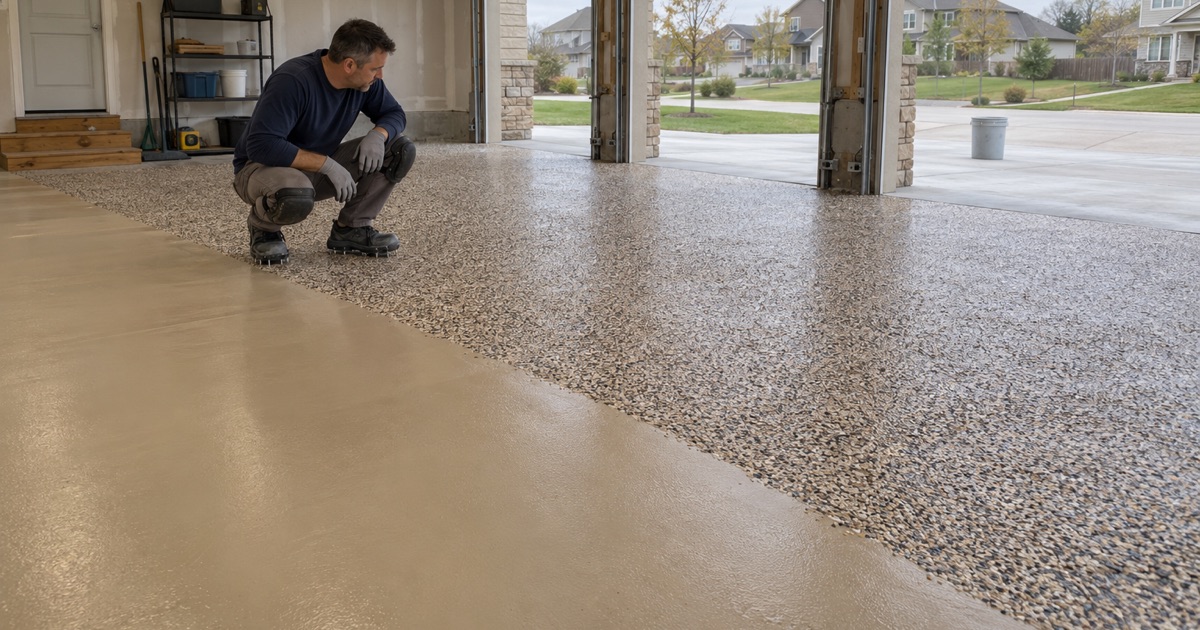
The Ground Slab and Base Coat
The slab is ground with diamond tooling to open the surface and remove old coatings and contamination, and cracks and spalls are filled and ground flush. A pigmented base coat, usually 100% solids epoxy or polyaspartic, goes down next, tinted to complement the flake blend. The base color shows between chips on a partial broadcast and gives depth on a full one.
The base coat also provides most of the floor’s bond to the concrete. That is why we do not cut corners on grinding or moisture testing, because a beautiful flake broadcast cannot save a base coat that never gripped the slab.
Broadcasting the Flake
While the base coat is wet, flakes are thrown into it by hand in a broad, even pattern. For a full broadcast, we keep throwing until no wet base shows; for a partial broadcast, we scatter a measured amount to reach the density you chose. Getting an even spread across a whole garage takes practice, and it is where an experienced crew shows.
Once the base cures, the loose excess is scraped and vacuumed off. Scraping knocks down raised edges so the topcoat can seal the chips smoothly.
Clear Topcoat
A clear topcoat, typically polyaspartic or polyurea, seals the flake and takes the daily wear. It resists hot tire pickup, road salt and many automotive fluids, and it holds its clarity under sunlight better than an epoxy top would.
One topcoat leaves more texture from the chips; two topcoats give a smoother, glossier surface that is easier to mop. We match that choice to how much grip the floor needs and how you plan to clean it.
Choosing a Flake Blend
Colors and Blends
Flake blends range from neutral grays and tans to bold mixes with black, white, blue or red chips. Neutral blends hide dust and salt best and suit most garages, while bolder blends can make a workshop, gym or showroom feel more finished. Blends that echo the house’s siding, trim or brick help the garage feel like part of the home.
We bring physical samples rather than relying on photos. Seeing the chips on your floor, under your lighting, is the best way to choose.
Chip Size
Chip sizes vary from fine specks to larger flakes about a half inch across. Larger chips give a bolder, more textured look; smaller chips give a uniform, finer appearance that can feel more refined in a basement or interior room.
Size also affects texture. Larger chips usually leave a bit more grip under one topcoat, which can be useful near the garage door.
Full Versus Partial Broadcast
A full broadcast hides imperfections, gives maximum texture and creates a dense, stone-like look. A partial broadcast shows the base color between chips, uses less flake and gives a lighter, airier look. In garages we usually recommend a full broadcast because it hides the most and wears well under tires.
Where Flake Floors Work Best
Garages Through an Iowa Winter
From November through March, garages around Iowa City take in road salt, brine and slush on every tire. A full flake floor with a chemical-resistant topcoat keeps that brine on the surface, and the blend hides salt residue between cleanings. The texture also helps when snow melts off a car and leaves the floor wet.
Curing in winter still follows the slab, not the calendar. In an unheated garage, we read slab temperature and the dew point and may recommend temporary heat or waiting for milder weather.
Basements, Laundry Rooms and Workshops
In basements, a flake floor brightens the space and makes spills easy to clean. It suits laundry rooms, home gyms and hobby shops, where a little texture and a forgiving look are more useful than a showroom gloss. Moisture testing and a check of the drains and sump come first, as they do on every basement floor.
Finer chips and a lighter blend tend to suit finished basement rooms, where the floor sits next to drywall and trim rather than a garage door. We often run the same system through a laundry room and a workshop with one blend, so the lower level reads as one connected space.
Commercial Spaces
Flake floors also suit auto shops, retail back rooms, locker rooms and commercial restrooms. In those areas we may use a more durable topcoat or add grit for wet conditions, and we plan the work around business hours.
A company’s colors can be matched with a custom blend, which turns a service bay or locker room into part of the brand. Because flake hides scuffs and dirt so well, these floors keep looking presentable between scheduled cleanings.
Caring for a Flake Floor
Cleaning and Winter Maintenance
Sweep or dust mop regularly, and wash with a mild cleaner and a soft mop or deck brush. In winter, squeegee salty meltwater toward the door or drain rather than letting it dry on the floor, and rinse the floor now and then to remove brine residue.
Protecting the Topcoat
Use pads under jack stands, furniture and equipment feet, and avoid dragging heavy items across the floor. If the topcoat wears in traffic lanes after many years, it can usually be abraded and recoated without disturbing the flake layer beneath.
- 20+ Years Coating Concrete
- Moisture Test in Every Scope
- Free Written Estimates