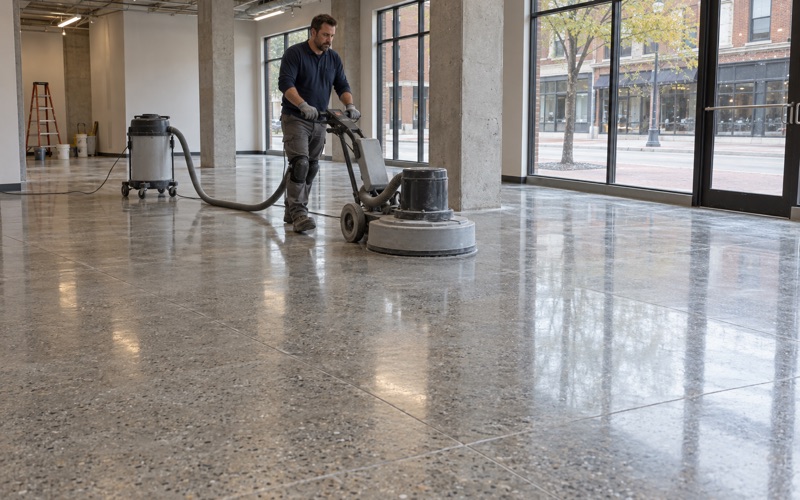
Iowa City Epoxy Flooring has spent more than 20 years on epoxy flooring in Amana and across eastern Iowa, and the floors that teach the most are the ones washed down every working day. We open every slab with a diamond grinder or a shot blaster rather than an acid etch, because a coating with nothing to grip lets go first where water and heat sit on it.
Before a price is final, a moisture test goes into the written scope, and the proposal names the product line, the coat count and the finished thickness. That way an owner, a plant manager or an inspector can hold the finished floor up against the paper and see whether it matches what was sold, coat by coat and mil by mil.
This page is about food processing floors in a historic village: what federal sanitation rules expect of a floor, what a smokehouse does to a coating, and how old buildings change the prep work. We also explain where a coating stops helping, because a resin floor is a surface, not a cure for water coming up through the slab.
A Federally Inspected Smokehouse in Main Amana
Federal red meat establishment status
The Amana Meat Shop & Smokehouse on F Street appears on the Iowa Department of Agriculture and Land Stewardship meat and poultry plant list under class FME, which the list defines as a federal red meat establishment. That places the shop under USDA Food Safety and Inspection Service oversight rather than the state program, so federal sanitation rules govern its rooms.
We mention the shop because it is the clearest local example of what an inspected processing floor has to do, not because we have worked there. We have no relationship with the shop, the Amana Society or any Amana business. Read what follows as a description of the standard and the engineering behind it, never as a project story.
Amana the census place versus the seven villages
The Amana Colonies are seven villages on about 26,000 acres in Iowa County: Amana, East, High, Middle, South and West Amana, and Homestead. The Census Bureau draws Amana as its own census-designated place covering the village of Amana, often called Main Amana, and the shop’s F Street address geocodes inside it.
That distinction matters when people talk about industrial floors here. The refrigerator plant often labeled Amana sits at a Middle Amana address, a different village, and Homestead has its own federally inspected beef establishment. Facts about the Colonies cover all seven villages, while facts about Amana the census place cover Main Amana alone.
A second rulebook for kitchens and shops
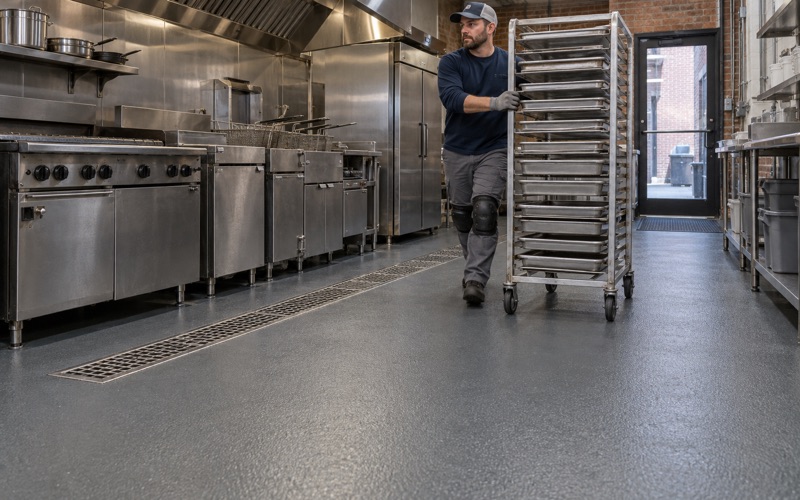
Restaurants and shops in Amana answer to a different inspector. Iowa County has no local health department contract, so the state Food Safety Bureau inspects food establishments directly against the 2017 FDA Food Code with Supplement. A kitchen floor we plan here follows that code, with coved bases and a texture specified for the wet areas.
The two rulebooks ask related things in different words. The Food Code addresses coved floor and wall junctures in section 6-201.13 and allows antislip finishes in section 6-201.11, while the federal meat rule speaks in performance terms. We sort out which one governs a room before choosing a system, since one building can hold both kinds of space.
Looking for epoxy-flooring closer to Cedar Rapids? See Cedar Rapids Epoxy-Flooring.
Impervious to Moisture: What 9 CFR 416.2 Asks of a Floor
The words in the rule
Under 9 CFR 416.2(b), walls, floors and ceilings in an inspected establishment must be built of durable materials impervious to moisture and be cleaned and sanitized as necessary to prevent adulteration of product. The same paragraph asks for sound construction and surfaces maintained to keep vermin out. It describes what the floor must do, not which product must be on it.
That is why no coating carries a USDA approval, and why we never sell one as if it did. FSIS judges the floor as it stands in the room, sealed or failing, and we hold no USDA status of any kind. Our job is to build a surface that keeps meeting the plain words of the rule after months of daily cleaning.
Impervious means continuous
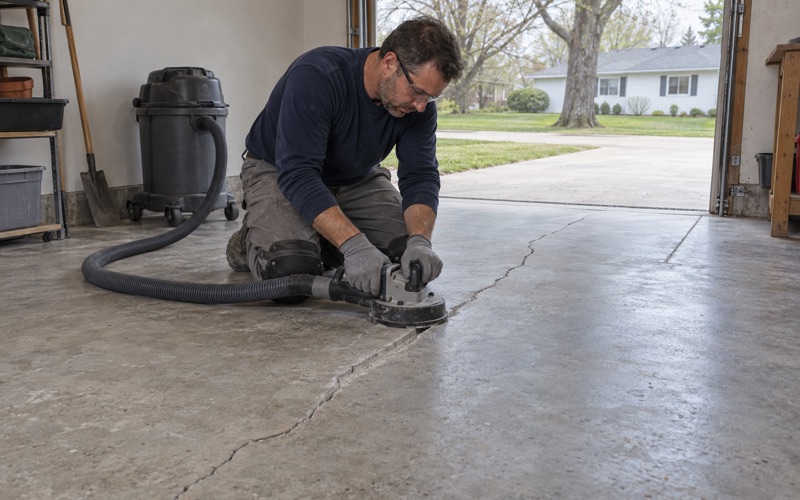
Bare concrete is porous, and a floor stops being impervious at its weakest point: a crack, a spalled joint, a worn patch near a doorway. We map cracks, spalls and old coatings before pricing, and we say so plainly when a slab needs repair or replacement before any resin should go over it.
The rule also calls for adequate floor drainage wherever floors take flooding-type cleaning, so a new coating has to meet the existing drains cleanly rather than leave a lip that holds water. Coved bases carried up the wall close the corner where hoses and squeegees push water, fat and trim, leaving no seam for residue to settle into.
Choosing the system and the profile
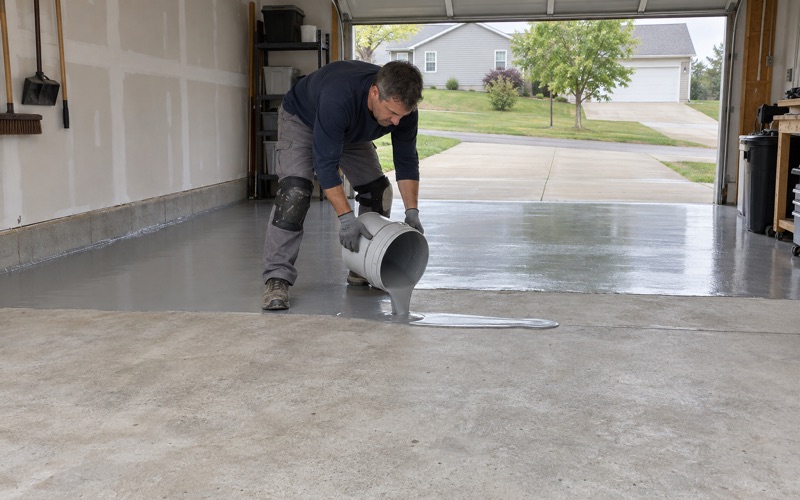
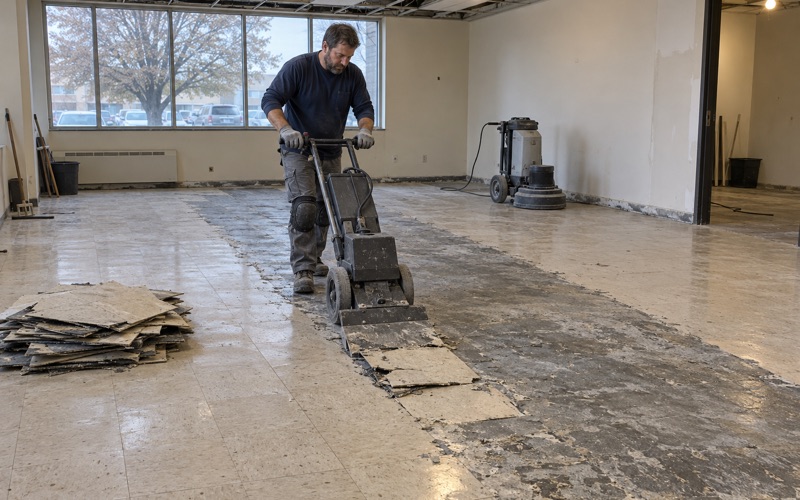
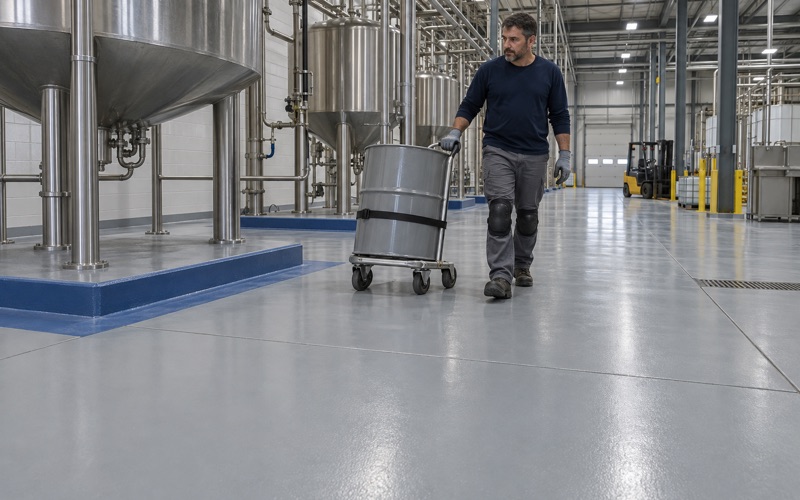
In wet processing rooms the usual choices are urethane cement, which tolerates thermal shock and moisture better than standard epoxy, or a 100% solids epoxy where temperatures stay moderate. Either one needs an ICRI concrete surface profile matched to its thickness, which is why grinding or shot blasting comes before any primer touches the slab.
When a coating peels in an inspected room, the bare concrete beneath no longer reads as impervious, and the owner is left scheduling repairs around production. We would rather spend an extra day on profile and testing than come back for a repair that forces a plant to close a room while new material cures.
Washdown, Heat and Condensation in Smoking and Processing Rooms
Daily washdown
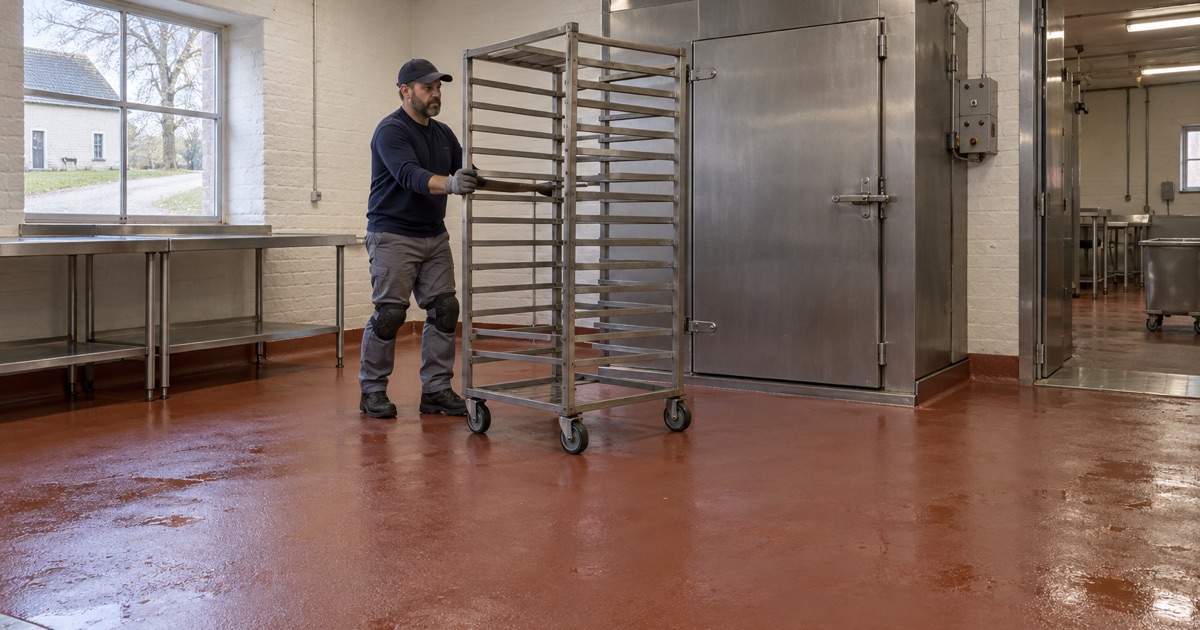
A processing floor sees hot water, sanitizer and scrubbing every shift, and a coating that softens or dulls under that routine will open up at the edges first. We specify systems rated for the chemicals and water temperatures the cleaning program actually uses, and we ask for the sanitizer data sheets before choosing one.
Texture is the other half of a wet floor. We specify slip resistance by the quartz aggregate broadcast and the topcoat that locks it in, sized so a crew can still clean it, rather than promising a grippy floor as a slogan. Too coarse a texture holds residue, and too fine a texture gives nothing underfoot once fat reaches it.
Heat near the smokehouse
Smoking rooms add heat that ordinary commercial floors never see, and the floor outside an oven door can swing from warm to hosed down in minutes. Thermal cycling like that is where a rigid epoxy can debond, which is why urethane cement is the usual candidate near heat sources. We set thickness by the duty of each zone, not one figure for the whole building.
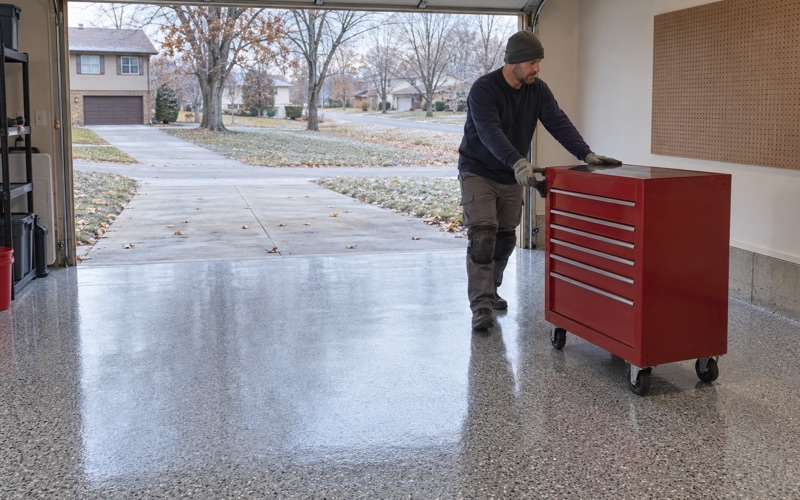
Floors under racks and carts take point loads and wheel traffic on top of the heat. We plan heavier sections at doorways and along cart routes, and we write those thicknesses into the proposal so the owner can see where the extra material went and check it after the crew leaves.
Condensation and cure timing
Section 416.2(d) of the same rule asks for ventilation adequate to control odors, vapors and condensation, and condensation is also a coating hazard. Resin applied while the slab sits near the dew point can trap moisture or develop amine blush, a waxy film that weakens the bond of the next coat.
We read the dew point spread at the slab surface and schedule cures by slab temperature, not by the calendar. In a working plant that usually means phased areas, overnight and weekend windows, and rooms kept closed until the system reaches its service cure, so production stops for the shortest time that still produces a sound floor.
Old Buildings Inside the Amana Colonies Land Use District
Old slabs, new sanitation surfaces
Main Amana’s building stock is old. Census estimates for 2020-2024 put 155 of its 312 housing units in the 1939-or-earlier bracket and none built since 2010, a small sample but a clear pattern. Village slabs, cellars and outbuildings carry patches, paint and sealers from several decades, and each layer has to come off before a new surface can bond.
Age alone tells us little about moisture, so we test every slab whatever year it was poured. ASTM F2170 in-situ relative humidity probes or ASTM F1869 calcium chloride tests go into the written scope, and a high reading points to a moisture-mitigation primer or a different system. We name moisture as the first warranty exclusion before anyone signs, not after a blister appears.
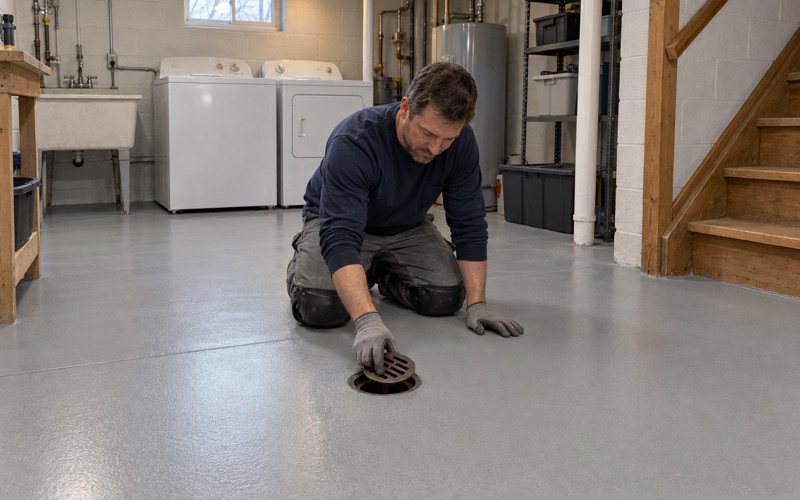
A coating is never waterproofing or flood protection, and it does nothing about radon, which in Iowa takes a state credential under Iowa Code chapter 136B. Where a cellar or basement shows past water, we check the sump pit and floor drain first, because resin laid over seepage only hides the problem for a season.
The district, not a city hall
Amana has no municipal government. The village is unincorporated, sits in Iowa County, and falls inside the Amana Colonies Land Use District, organized under Iowa Code chapter 303 to conserve the area’s distinctive historical and cultural character. The Colonies were designated a National Historic Landmark District on June 23, 1965, and that history shapes how work is reviewed.
All construction and demolition in the district requires a zoning permit from the district’s Board of Trustees, with historic-district properties reviewed first by its Historic Preservation Commission. We could not confirm whether an interior floor coating counts as construction, so we ask owners to check with the district office in Amana before work is scheduled rather than guessing either way.
Keeping dust and odor inside the job
Grinding a slab in a working village means dust control matters to neighbors as well as staff. We capture dust at the grinder with a vacuum instead of rinsing it toward a floor drain or storm inlet. Low-odor products are available for rooms next to retail or living space, offered as a comfort and re-entry choice, since Iowa has no state VOC content rule for floor coatings.
- 20+ Years Coating Concrete
- Moisture Test in Every Scope
- Free Written Estimates